


There’s a lot of confusion out there about the different kinds of sugar and sweeteners available today, how to use them, and whether they are healthy and safe to use.
Here is everything you ever wanted to know about sugar, plus the lowdown on the over 25 different types of sweeteners on the market today.
Caveat Emptor
How did we ever get to a place where there are so many types of sweeteners on the market that there might be genuine confusion? Just 100 years ago, there was only cane sugar, sugar beets, sorghum, honey and maple syrup, and Americans each ate less than two pounds a year of them, total.
But today, whether from soda, snacks, cereal, pasta, bread or other packaged foods, Americans each eat the equivalent of 22 teaspoons of sugar a day (teens get 34!), adding up to over 60 pounds of sugar per person, per year. And in just 32 ounces of soda, you (or your teen) can easily consume at least a quarter pound of sugar a day!
According to Rachel K. Johnson, lead author of a paper published in the American Heart Association (AHA) journal Circulation, too much sugar not only makes Americans fat, but also is a key culprit in diabetes, high blood pressure, heart disease, and stroke. The typical American high-sugar diet is also a major factor in the development of cancer and Alzheimer’s disease too.
Sugar raises blood glucose, triggers abnormal insulin surges, and makes us hungry and fat. It also reduces HDL cholesterol (the “good” kind), skyrockets triglycerides, converts the less-harmful large LDL particles to the much more harmful small LDL particles, and contributes greatly to inflammation in the body. Some scientists even think that sugar is a slow-acting poison.
Sugar Substitutes Are No Better
Replacing sugar with low-calorie sweeteners, such as aspartame, stevia, or sucralose, is one way people try to avoid sugar and its bad effects on health, but some studies suggest that sugar substitutes might not be any better for you than sugar.
Researchers examined 56 studies that evaluated the health effects of consuming sugar alternatives. The research showed that people who frequently consumed sugar substitutes often gained more weight than those who consumed less of them. Diet soda intake in particular has been linked with cardiovascular conditions, such as stroke and heart attack, as well as type 2 diabetes and obesity.
Researchers are also concerned that sugar-free sweeteners change the microbiome—the bacteria that live in and on us and have significant effects on health—in ways that could increase disease risk. Other researchers worry that people who consume these non-sugar sweeteners might be more likely to develop a taste for sugary foods and drinks throughout their lives.
You might think there’s a clear benefit to switching to diet drinks or low-sugar foods sweetened with alternatives, but as the research shows, the evidence for that is not there.
So How Much is Too Much Sugar?
The Heart Association report recommends that most women should be getting no more than 6 teaspoons a day, or 24 grams of added sugar—the sweeteners and syrups that are added to foods during processing, preparation or at the table. For most men, the recommended limit is 9 teaspoons, or 36 grams.
This means that one 6-ounce cup of store-bought, flavored yogurt, with the equivalent of about 10 teaspoons of sugar, would put you over your sugar limit for the whole day!
Worldwide consumption of sugar has tripled during the past 50 years, and commensurate with it, the incidence of obesity and chronic disease has become epidemic. In fact, sugar has recently been found to be so toxic to the body, that some scientists have argued for its regulation, like alcohol or tobacco.
Regulation on food processors, taxation, removal of farm subsidies, and/or public health education might not be bad ideas, given that the high-sugar, Standard American Diet contributes to more disease and death than alcohol and tobacco combined.
So this summary of sweeteners comes with a warning:
Added sugar in any form is not good for you, so please use it sparingly.
An Inside Look at Sugar
There are various types of sugar, chemically speaking. Sucrose comes primarily from sugar cane or sugar beets; fructose, maltose and dextrose come from fruits and starchy plants; lactose comes from dairy products, etc.—basically, if it ends in -ose, its a type of sugar.
Sucrose, like all complex sugars, breaks down during digestion into two simple sugars: glucose and fructose. Glucose is transported by insulin to the cells for energy, which, unless burned, gets stored away as fat. Yep, you read that right: Sugar, unused, makes you fat.
Glucose is the foundation for the Glycemic Index (GI), which ranks foods on how they affect our blood glucose levels. This index measures how much your blood glucose increases in the two or three hours after eating certain foods. Table sugar, or sucrose, has a GI of 65. Eating low (below 50) on the glycemic index can help you control your blood sugar naturally.
In addition to glucose, complex sugars like sucrose or lactose also break down into fructose. People tend to think that fructose is a benign sugar because it is found naturally in fruit. But, despite the name “fructose,” whole fruit actually has a relatively low concentration of fructose compared to processed foods like agave syrup, high-fructose corn syrup, or cane sugar.
Fructose does not raise blood glucose levels immediately the way glucose does, and is therefore considered low on the glycemic index. But don’t be fooled into thinking that’s a good thing.
Fructose travels to the liver where it gets converted to triglycerides—the fats in the blood that are associated with heart disease. Like excess blood glucose, blood triglycerides made from fructose are stored as fat, which increases the size of your fat cells, contributing to weight gain and obesity.
The excess triglycerides created when you eat fructose increase insulin resistance, thereby boosting insulin production to very high levels, which fosters the development of diabetes in a “back door” fashion. Fructose also interferes with the absorption of minerals and impairs the immune system.
Related: See The Skinny on Fat, Part 2: How Carbs Make You Fat
So, now that you know how sugar affects the body generally, let’s break down 25 different kinds of sugar and sweeteners, how they effect your health and the environment compared to others, and how best to use them in your cooking.
White Sugars
 “Regular” or white table sugar
 “Regular” or white table sugar
There are many different types of refined, granulated sugar derived from sugar cane or sugar beets. Cane and beet sugars are mainly made of sucrose and come in varying crystal sizes that provide unique functional characteristics appropriate for a specific food’s special need.
Refined white sugar is 50% glucose and 50% fructose, and is highly processed using multiple fossil-fuel- and chemical-intensive processes. It provides empty calories and zero nutritional value. Additionally, the fact that over 65% of commercial sugar is made from GMO sugar beets genetically engineered to tolerate being sprayed with high amounts of carcinogenic glyphosate, makes white sugar something to be avoided.
One teaspoon of white sugar contains 16 calories and has a glycemic index of 65.
“Fruit Sugar” or Crystalline Fructose
Crystalline fructose is slightly finer than “regular” sugar and is used in dry mixes such as flavored gelatin and pudding desserts, and powdered drinks. Crystalline fructose has a more uniform small crystal size than “regular” sugar which prevents separation or settling of larger crystals to the bottom of the box—an important quality in dry mixes. Since it is made totally from fructose, it is definitely harmful to your health if you eat it often.
Crystalline Fructose contains 15 calories and has a glycemic index of 15.
Brown Sugars
Brown sugars range in the amount of processing they receive, but they are brown because, unlike white sugar, they have not had all of the molasses chemically and physically removed. The least processed of the brown sugars—Rapadura or panela—often still has the minerals and enzymes intact.
Brown palm sugars differ in texture and taste from brown cane sugars, but are often minimally processed as to still contain trace minerals, too. Brown sugars can be used in cup-for-cup substitution with white refined sugars.
Brown Sugar (common light and dark)

Common brown sugar is really highly processed and refined white sugar (often GMO) that has had the surface molasses syrup added back in, which imparts its color and characteristic flavor.
Dark brown sugar has a deeper color and stronger molasses flavor than light brown sugar. Lighter types are generally used in baking and making butterscotch, condiments and glazes. The rich, full flavor of dark brown sugar makes it good for gingerbread, mincemeat, baked beans, and other full flavored foods.
Brown sugar tends to clump because it contains more moisture than white sugar, but putting a piece of bread in your sugar box is said to help prevent this. Common brown sugar is a refined product best replaced by one of the naturally brown sugars below.
Brown sugar contains 17 calories per teaspoon and has a glycemic index of 65.
Evaporated Cane Juice and Sucanat™

Evaporated Cane Juice is the common name for the sugar produced directly from milled cane using a single-crystallization process. The filtered, clarified juice is simply heated to remove water and then allowed to cool, forming granular crystals of what is basically dried sugar cane juice.
The crystals retain their molasses, creating a very distinctive and quite strong flavor. Unlike more refined sugar, Sucanat™ is grainy, rather than blocky and crystalline. It also contains less sucrose, because it is has not been purified.
Sucanat™ is a contraction of “Sugar Cane Natural.” It can be difficult to bake with, because it behaves very differently from more processed forms of sugar. The lower sucrose content makes Sucanat™ less sweet, which can be confusing for bakers who want to replace regular sugar with Sucanat™ on a one-to-one basis.
The granular texture can also manifest in finished baked goods, causing a disappointing texture, and the strong flavor can be unpleasant, especially when mixed with other intense flavors like citrus or chocolate. (Where to buy Sucanat online)
Sucanat and cane juice contain about 16 calories per teaspoon and have a glycemic index of 55.
Turbinado, Muscovado, Demerara and Rapadura

Turbinado sugar is raw sugar which has been partially processed, where only the surface molasses has been washed off. It has a blond color and mild brown sugar flavor, and is often used in tea and other beverages. Sugar in the Raw™ is the most commonly known brand of raw, turbinado sugar. (Where to buy turbinado sugar online)
Muscovado sugar, a British specialty brown sugar, is very dark brown and has a particularly strong molasses flavor. The minimally processed crystals are slightly coarser and stickier in texture than “regular” brown sugar. (Where to buy muscovado sugar online)
Popular in England, Demerara sugar is a light brown raw sugar with large golden crystals, which are slightly sticky from the adhering molasses. It is often used in tea, coffee, or on top of hot cereals, and it has a taste and texture that some people adore. (Where to buy Demerara sugar online)
Rapadura is the Portuguese name for a form of sugarcane juice common in Latin American countries such as Brazil, Venezuela (where it is known as papelón, piloncillo, or panela), and the Caribbean. Made from dried sugarcane juice in the form of a brick, rapadura is largely produced on site at sugarcane plantations in very warm, tropical regions.
In Venezuela, rapadura is an essential ingredient for many typical recipes, and in some parts of the country, it is used in place of refined sugar as a more accessible, cheaper and healthier sweetener. Rapadura is the least processed of all the cane sugars, and is rich in dietary iron. (Where to buy Rapadura sugar online)
These sugars contain about 17 calories per teaspoon and have a glycemic index of 55.
Palm Sugar
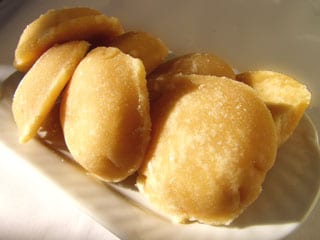
Palm sugar is a traditional sweetener that has been used for thousands of years. Because it comes from tapping trees that require little water and help build agroforest ecosystems, it is also the most sustainably produced granulated sugar in the world.
Palm sugar was originally made from the sugary sap of the Palmyra palm, as well as the date palm or sugar date palm. Now it is also made from the sap of the sago and coconut palms and may be sold as “coconut sugar.”
Date sugar can also be made with the fruit of the palm by pulverizing very dry dates, but note that sugar made this way will not dissolve well in liquid.
Palm sugar varies in color from a light golden color to a rich dark brown. It tends to be extremely grainy, with dried forms being highly crumbly, and it is typically minimally processed.
Many people like to use palm sugar in cooking because it is so coarse and unprocessed, and many Southeast Asian recipes call specifically for palm sugar. The light processing leaves much of the flavor of the sugar intact, creating an almost molasses-like flavor. Palm sugar is lower on the glycemic index than cane or beet sugar.
You will often see palm sugar sold as “coconut sugar,” which can be a bit confusing, since coconut fruits themselves are not actually involved. It is also sometimes marketed as “coconut nectar,” “palm honey” or jaggery. Asian markets are a good resource for palm sugar, and it can also be ordered through specialty retailers.
Many companies sell palm sugar in jars or tins which make it easy to ship and store, so if you purchase a block or cone of palm sugar (as opposed to a bag), be aware that blocks are often coated in wax for shipping. Check for wax before shaving off the desired amount of palm sugar. (Where to buy palm sugar online)
Palm sugar contains 18 calories per teaspoon and has a glycemic index of 35.
Liquid Sugars
Corn Syrup
There was a time when manufacturers of processed foods used common table sugar, or sucrose, as their default sweetener. In the 1970s, however, Japanese scientists discovered a process which could convert cornstarch into an alternative sweetener called high fructose corn syrup.
High fructose corn syrup contains 55% fructose and 45% glucose, which makes it virtually as sweet as sucrose or natural honey. When imported sugar became prohibitively expensive, many processed food and beverage manufacturers began using high fructose corn syrup exclusively.
Today, high fructose corn syrup has replaced pure sugar as the main sweetener in most carbonated beverages and sodas. High fructose corn syrup is also hiding in products like salad dressing, spaghetti sauce, and whole wheat bread, and it is often one of the first ingredients in cake mixes, cookies, sauces, breakfast cereals and commercial baked goods.
High fructose corn syrup is made through a highly industrialized, chemical fermentation and distillation process that uses tremendous amounts of energy to produce. Many health experts and environmentalists are concerned over the level of genetic modification, environmental pollution and toxic processing used to create high fructose corn syrup. Others point out the association between processed foods containing high fructose corn syrup, diabetes, heart disease, and obesity.
In fact, according to a Princeton University study, high-fructose corn syrup caused significantly more weight gain in rats who consumed it than in those with access to table sugar, even when their overall caloric intake was the same. Says Professor Hoebel, “Some people have claimed that high-fructose corn syrup is no different than other sweeteners when it comes to weight gain and obesity, but our results make it clear that this just isn’t true…”
All around, high fructose corn syrup is an industrially-made, glyphosate-laden pseudo-food to be avoided.
Corn syrup contains about 20 calories per teaspoon and has a glycemic index of 30-68, depending on the concentration.
Agave Syrup

Agave syrup is very high in fructose. Depending on the brand, agave can contain as much as 92% fructose. The amount of fructose in agave is much, much higher than the 55% fructose in high-fructose corn syrup or the 50% fructose in refined table sugar, making agave “nectar” worse for you than either table sugar or corn syrup. Yikes! Perhaps it should be called High-Fructose Agave Syrup (HFAS)!
The fact that agave syrup is high in low-glycemic fructose is often hailed as a benefit of using it. What many people don’t realize is that concentrated fructose is probably worse for you than high amounts of glucose. In fact, agave syrup has been banned by the Glycemic Index Institute for the harm it caused to study participants. (See Agave Syrup is Bad for You for more information.)
Agave syrup is derived from the liquid within the agave cactus, which is food that bats need to survive. As a result of the high demand for agave syrup, we are essentially destroying bat populations, which pollinate our food. Agave is touted as a vegan substitute for honey, but with the effects its production has on bat populations, the claim of not harming animals is dubious.
Agave syrup has 21 calories per teaspoon and a glycemic index of 15.
Yacon Syrup
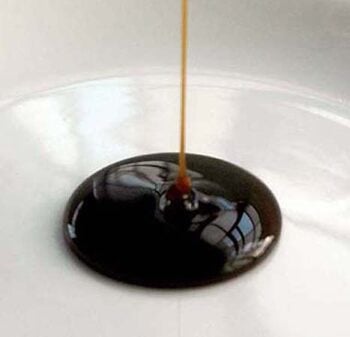
Yacon syrup is a sugar substitute native to the Andean region of South America. It is glucose-free, and does not increase blood sugar levels. Because of this, yacon syrup is often recommended as a sweetener to those suffering from diabetes or at risk for becoming diabetic.
The syrup is derived from the roots of the yacon plant, and according to some studies, it is a good source of antioxidants. The syrup also contains up to 50% of FOS (fructooligosacharides). The consumption of FOS does not increase blood glucose. However, since any inulin-derived sweetener has large amounts of fructose, the same concerns about the health effects of fructose apply.
Yacon syrup is usually made with minimal processing in an evaporator, like the ones used to make maple syrup. Yacon syrup is often compared to molasses, caramel, or honey in taste, with a deep and rich, mildly sweet flavor. It easily substitutes for maple syrup or molasses in recipes, and can be used to sweeten beverages. It is typically sold in jars like honey, and can be purchased online or at specialty food stores. (Where to buy yacon syrup online)
Yacon syrup has 7 calories per teaspoon and has a glycemic index of 1.
Rice Syrup
Rice syrup is a natural sweetener which is made from cooked brown rice which is specially fermented to turn the starches in the rice into sugars. Along with other alternatives to sugar, rice syrup can usually be found in natural foods stores and in some large markets. Since rice syrup will cause a large elevation in blood sugar, it is not suitable for diabetics.
Individuals with gluten intolerance should read rice syrup labels carefully. Many producers culture the enzymes needed to make rice syrup on grains which contain gluten. Unless the label clearly specifies that the product is gluten free, it should be assumed that the food contains gluten.
The thick, sweet syrup can be used one-for-one like honey, molasses, and other liquid sweeteners, and with some planning it can also replace granulated sugar. Rice syrup has a faintly nutty flavor which is not always appropriate for all foods. You should taste it before using it extensively, and you may want to experiment with small batches before committing. Since rice syrup is less sweet, your dish will obviously be less sweet as well.
Because recent testing has shown that the U.S. rice crop is contaminated with arsenic from decades of toxic pesticide usage, it is generally a good idea to reduce your consumption of rice and rice products, like rice syrup.
A teaspoon of rice syrup contains 20 calories and has a glycemic index of 100.
Molasses

Molasses is a thick, brown to deep black, honey-like substance made as a byproduct of processing cane or beet sugar. It is enjoyed as a sweetener in many countries, and most particularly in England where it is called treacle. Today, molasses is used primarily in baking. No gingerbread would be quite the same without the addition of molasses.
Molasses has somewhat more nutritional value than does white or brown sugar. The process by which it is extracted and treated with sulfur results in fortification of iron, calcium and magnesium.
Calories in molasses are approximately the same as sugar, about 16 calories per teaspoon (5 ml) with a glycemic load of 55, however it only contains about half the sucrose as sugar. It is also made up of both glucose and fructose. Though it is high in iron, it is also high in calcium, which tends to prevent iron from being absorbed by the body, thus its benefits as a mineral supplement may be a bit overrated. (Where to buy molasses online)
Maple Syrup

Maple syrup is one of the many wonders of the world. This sustainably-produced, viscous amber liquid with its characteristic earthy sweet taste is made from the sap of the sugar, black or red maple tree. Maple syrup contains fewer calories and a higher concentration of minerals than honey, and is an excellent source of manganese, and a good source of zinc.
The process of creating maple syrup begins with tapping (piercing) 40 year old trees, which allows the sap to run out freely. The sap is clear and almost tasteless and very low in sugar content when it is first tapped. It is then boiled to evaporate the water, producing syrup with a sugar content of 60%. This maple syrup may be further reduced to create thicker delicacies, such as maple butter, maple cream, and maple sugar.
Maple syrup is, by law, graded according to color in the United States and Canada—although the grading systems differ between the countries. In the U.S., there are Grade A and Grade B maple syrups, with three sub-divisions of Grade A: light amber, medium amber, and dark amber. Grade B is even darker than Grade A dark amber.
Many people assume that the grading system is also indicative of quality, but in reality, it only helps to differentiate the color and taste of the maple syrup, which is a matter of personal preference. The tastes are different, but to say one is objectively “better” than another would be incorrect.
Many pancake syrups are actually made entirely of maple-flavored corn syrup or they are cut with corn syrup. Real maple syrup will be graded A or B by the USDA, and is typically quite a bit more expensive than generic “pancake syrup.” (Where to find 100% maple syrup online)
Maple syrup contains 17 calories per teaspoon and has a glycemic index of 54.
Honey

Honey is a mixture of sugars and other compounds, mainly fructose and glucose. Honey contains trace amounts of several vitamins and minerals and also contains tiny amounts of several compounds thought to function as antioxidants and anti-microbials.
The specific composition of any batch of honey depends on the flowers available to the bees that produced the honey. If those flowers happened to be heavily sprayed with pesticides, then those poisons will be in the honey too, so make sure you can trust your source before buying.
Pasteurized honey is honey that has been heated in a pasteurization process. Pasteurization in honey reduces the moisture level, destroys yeast cells, and liquefies crystals in the honey. While this process sterilizes the honey and improves shelf-life, it has some disadvantages. Excessive heat-exposure also deteriorates the honey and destroys vitamins and enzymes. The heat also affects appearance, taste, and fragrance and can also darken the natural honey color.
Raw honey is honey as it exists in the beehive or as obtained by extraction, settling or straining without adding heat (although some honey that has been “minimally processed” is often labeled as raw honey). Raw honey contains some pollen and may contain small particles of wax.
Local raw honey is sought after by allergy sufferers as the pollen impurities are thought to lessen the sensitivity to hay fever. Raw honey is mildly antibacterial, antifungal and antiviral, and can be used to treat small cuts. A spoonful of raw honey is also excellent for soothing a sore throat or settling a nauseous stomach.
Manuka honey, made from Manuka flowers in New Zealand, is thought to be the honey with the highest nutrition and greatest healing power. (Where to get raw Manuka honey online)
Harvesting honey from farmed hives does not harm the bees, and in fact encourages honeybee research and protection, since we depend on their good health to both produce honey and to pollinate our crops.
Honey has about 21 calories per teaspoon and has a glycemic index of 50.
Sorghum
Produced from sorghum canes grown across much of the South, sorghum syrup used to be one of the only affordable sweeteners produced locally in the U.S. Sorghum is a labor intensive crop, so it fell out of use during World War II, when there was a shortage of farm labor to produce it. After the war, industrial farming and food processing techniques made sugar cane and later, corn syrup, much cheaper than sorghum to produce, and so it fell into obscurity.
Sorghum syrup is making a comeback in Real Food circles because sorghum is a highly-nutritious, gluten-free, ancient cereal grain that is minimally processed into syrup, and still contains a lot of antioxidant vitamins and trace minerals. Sorghum syrup has a mild, unique flavor that is a little like molasses, and can be used anywhere you would use molasses, honey or maple syrup. (Where to buy sorghum syrup online)
Sorghum contains 14 calories per teaspoon and has a glycemic index of 50.
Coconut Nectar
Coconut nectar is simply coconut palm sugar that hasn’t had the water completely evaporated out of it. It is a syrup you can use like any other sugar syrup, though it is slightly less sweet than others. See Palm Sugar, above. (Where to buy coconut nectar online)
Coconut nectar has 15 calories per teaspoon and a glycemic index of 35.
Sugar Alcohols
Xylitol, Erythritol, Mannitol, Sorbitol and Glycerine (Glycerol)

Sugar alcohols (which end in -ol) occur naturally in plants. Some of them are chemically or biologically extracted from plants (sorbitol from corn syrup, xylitol from birch trees, and mannitol from seaweed), but they are mostly manufactured in a highly-intensive industrial process from sugars and starches.
Sugar alcohols are like sugar in some ways, but they are not completely absorbed by the body. Because of this, they affect blood sugar levels less, and they provide fewer calories per gram. Additionally, sugar alcohols don’t promote tooth decay as sugars do, so are often used to sweeten “sugar-free” chewing gum.
Xylitol and erythritol can often be swapped one for one with sugar, but you will have to read the package and experiment with each type to see how it best substitutes for sugar in your recipes. Sugar alcohols do not brown or caramelize like sugars do.
Though sugar alcohols have fewer calories than sugar, most of them aren’t as sweet, so more must be used to get the same sweetening effect. For example, Maltitol has 75% of the blood sugar impact of sugar, but only 75% of the sweetness, so they end up being equal in the end.
Xylitol, on the other hand, is just as sweet as cane sugar, but has a low glycemic index of 13, and also helps prevent tooth decay by inhibiting bacterial growth in the mouth.
Erythritol is only 70% as sweet as cane sugar, but it has zero glycemic index, and is sometimes recommended for people fighting candida.
Food-grade glycerine/glycerol is a liquid derived from vegetable oils, but it is only 60% as sweet as cane sugar, and can be hard to use.
Because they are not completely absorbed, sugar alcohols like sorbitol and xylitol can ferment in the intestines and cause bloating, gas, or diarrhea, and they are not recommended for people with IBS or other digestive issues.
People can have different reactions to different sugar alcohols, so careful experimentation is advised. Sugar alcohols can be made from corn and other allergens, (including GMO corn) so always check the label or call the producer to make sure the product won’t give you a reaction.
Sugar alcohols like xylitol are highly toxic to dogs.
Sugar alcohols contain between 4-9 calories per teaspoon, depending on type, and have a glycemic index of 0–15, depending on type.
Swerve®
Swerve is the latest “natural sweetener” to hit the market. Swerve is made from a combination of erythritol, oligosaccharides and natural flavors that give it excellent baking and cooking functionality. Unlike other sugar alcohols, Swerve even has the ability to brown and caramelize!
Unfortunately, while preferable to artificial sweeteners like Equal, Sweet’N Low, and Splenda, Swerve is still a highly-refined sweetening agent made from a sugar alcohol. Even though it is generally recognized as safe (GRAS) by the U.S. Food and Drug Administration (FDA), erythritol has been known to cause stomach pains, headaches, and even diarrhea in some individuals.
However, erythritol is non-glycemic and non-carcinogenic. The company that produces Swerve claims it is non-allergenic and much less likely than other sugar alcohols to cause gastrointestinal distress. Even so, it is still a sugar alcohol, which means it is not completely absorbed by the body, and therefore has no nutritional benefits.
Swerve has zero calories and zero glycemic index.
Sugar-Free Sweeteners
Stevia
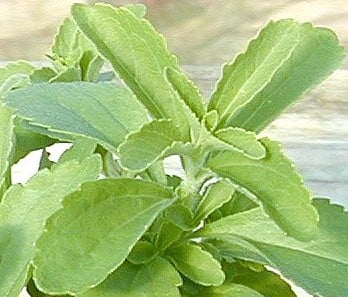
Stevia is a South American herb that has been used as a sweetener by the Guarani Indians of Paraguay for hundreds of years. The leaves of the small, green Stevia rebaudiana plant have a delicious and refreshing taste that can be 30 times sweeter than sugar, but it has no calories, and consuming it does not raise blood glucose levels at all, nor does it feed candida infections.
In the 1930s, chemists in France isolated stevioside, the compound in the leaves which is responsible for their sweetness. This extremely sweet compound is often sold in a highly refined powder or liquid form, under brand names like Truvia (which also contains erythritol) and Sweetleaf. In contrast, stevia can also be made simply by crushing or tincturing the leaves of the plant to form a powder or a syrup with an intensely sweet flavor.
Refined stevia can be 30-200 times sweeter than other sugars, meaning that only a tiny amount needs to be used. It is challenging to bake and cook with stevia for this reason. Some types of stevia can have a bit of a bitter aftertaste that some people do not like. See Is Stevia Healthy? for more information. (Where to buy stevia online)
Monkfruit
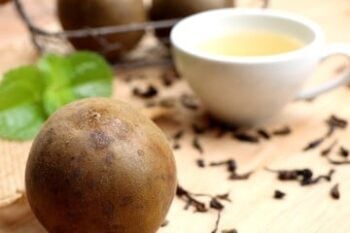
Monkfruit—also called Lo Han Guo—is the fruit of the Momordica grosvenorii, a plant cultivated in the mountains of southern China for thousands of years. The Chinese call Lo Han the “longevity fruit” because in the steep mountain fields in Guangxi Province where it is grown, there are an unusual number of residents that live to be 100 years old or more.
Although the locals that reach this ripe old age proclaim a tranquil lifestyle, regular exercise and simple diet to be their secret (no doubt!), many studies are underway which are confirming the nutritional and healing properties of monkfruit.
Mogrosides extracted from monkfruit taste 300 times sweeter than sugar, but without affecting blood glucose levels, making this sweetener an excellent choice for diabetics or people fighting candida infections.
Monkfruit (sometimes called Lakanto) is available as a pure extract and as a powder that is easier to bake with than stevia—and it has no aftertaste. It is often mixed with erythritol to make a one-for-one substitute for sugar. The downside? It’s pricey and a bit hard to find. (Where to buy monkfruit online)
Monkfruit has zero calories and zero glycemic index.
Saccharin, Aspartame & Sucralose

Saccharin, most often known by the brand name Sweet ‘N Low®, is the oldest artificial sweetener. It comes in the pink packet, and is commonly used to sweeten diet soft drinks and candies or to improve the flavor of medicine and toothpaste.
Aspartame is sold under a number of different product names, including Equal® (in the blue packet), NutraSweet®, Tropicana Slim®, and Canderel®. Like saccharin, it is used to sweet diet soft drinks and candies. Although it is 180 times as sweet as sugar, it is not suitable for baking because it loses much of its sweetness when heated. Many people consider this aftertaste to be a significant drawback to using aspartame.
Sucralose, sold under the name Splenda® in the yellow packet, is an artificial sweetener that is heat stable. Splenda® is made from refined sugar which has a molecule of chlorine artificially added to it so it is not properly absorbed by the body.
All three are completely artificial, chemical sweeteners made by highly-industrial, fossil-fuel-guzzling processes. None of them have any calories or glycemic index, but it is unlikely they will help you lose weight. Additionally, each of them has been linked in numerous studies to obesity, metabolic syndrome and diabetes, as well as chronic illnesses like heart disease.
The Sweet Surrender
While no sugar or sweetener is without its health risks, in moderation, minimally processed, traditional sweeteners like rapadura, palm sugar, maple syrup, sorghum, raw honey, monkfruit, or stevia leaf can be delicious additions to a healthy, real food diet.
Updated August 2021






87 thoughts on “The Complete Guide to Sugar and Sugar Substitutes”