While I am no big fan of plastic because it is made from petroleum, it is nevertheless an unavoidable part of modern life in the U.S. Therefore, it is extra important to separate the “good” plastics from the ones that can leach harmful chemicals like BPA, BPS, phthalates, xenoestrogens, lead and antimony into food, beverages and the environment.
These toxic chemicals—found in the majority of plastic, PVC and vinyl items produced today—have been linked to obesity, enlarged male breasts, earlier puberty in girls, and increased incidence of breast, prostate and other cancers. In fact, they are so toxic, these plastic additives have been banned in Europe, Canada, China, and an increasing number of cities and states in the U.S.
Most of us know by now to avoid toxic, BPA-ridden plastic beverage bottles, plastic food storageware, plastic wrap and resealable (or zipper-lock) food storage bags. (If you didn’t know that, now you do!)
But, plastic is everywhere, so toxins can be found in the places you might not know about, like:
- BPA-free plastic bottles (BPS),
- the inside lining of nearly all canned food, soda and baby formulas (BPA/BPS),
- canning jar lids (BPA),
- toothbrushes and toothpaste tubes (BPA),
- plastic lunchboxes and toys (phthalates and lead),
- dental sealants and composite fillings (BPA/BPS),
- plastic and vinyl jewelry, purses, shoes and other fashion items (phthalates, mercury and lead),
- cash register receipts (BPA/BPS), and more.
One way to sort out which plastics are safer than others is by checking the Plastic ID Code on the bottom of the item, which is that little number inside the triangle that tells you if you can recycle it.
What Do The Numbers on Plastic Containers Mean?
#1 - PET or PETE (polyethylene terephthalate)
PET is used for water and soft drink bottles, mouthwash bottles, containers for condiments like nut butters and ketchup, and TV dinner trays. PET is considered safe, but it can actually leach the toxic metal antimony, which is used during its manufacture.
One study that looked at 63 brands of bottled water produced in Europe and Canada found concentrations of antimony that were more than 100 times the typical level found in clean groundwater (2 parts per trillion).
The study also found that the longer a PET bottle sits on the shelf—in a grocery store or your pantry—the greater the amount of antimony present. It is also thought that the amount of antimony leaching from these PET bottles increases the more they are exposed to sunlight, higher temperatures, and varying pH levels.
Brominated compounds have also been found to leach into PET bottles. Bromine displaces iodine in the body, and is a central nervous system depressant. It can accumulate over time, and trigger paranoia and other psychotic symptoms. Avoid if you can.
#2 - HDPE (high-density polyethylene)
HDPE is used in butter tubs, milk jugs, juice, household cleaner and shampoo bottles, as well as cereal box liners and grocery bags. It is often considered a low-toxin plastic, but like almost all plastics, it has been found to release estrogenic chemicals.
In one study, 95 percent of all plastic products tested were positive for estrogenic activity. This means they can disrupt your hormones and even alter the development of your cells, which puts infants and children at even greater risk. In this particular study, even HDPE products that were free of bisphenol-A (BPA) still tested positive for other estrogenic chemicals. Use with caution.
#3 - PVC (polyvinyl chloride)
PVC is used in plastic cooking oil bottles, deli and meat wrappers, shrink wrap, sandwich baggies, and plastic “saran” wrap. It is also found in plastic toys, lunch boxes, table cloths and blister packs used to hold medications. And it is commonly used to make jewelry and faux-leather purses, shoes and jackets.
PVC contains numerous toxic chemicals including lead and DEHP, a type of phthalate used as a plastics softener. As if the lead weren’t bad enough, phthalates are considered “gender-bending” chemicals which cause the males of many species to become more female. These chemicals disrupt the endocrine systems of wildlife, causing testicular cancer, genital deformations, low sperm counts and infertility in a number of species, including polar bears, deer, whales, otters, and frogs, among others.
Scientists believe phthalates cause similar harmful effects in humans. If your home has flexible vinyl flooring, or those padded playmat floors for kids (often used in day cares and kindergartens, too), there’s a good chance it is made from toxic PVC. PVC flooring has also been linked to chronic diseases like allergies, asthma and autism.
PVC is one of the worst health and environmental offenders. Avoid at all costs.
#4 - LDPE (low-density polyethylene)
LDPE is considered to be low-toxin plastic and it is used in bread bags, produce bags, squeezable bottles as well as coated paper milk cartons and hot/cold beverage cups. While LDPE does not contain BPA, it can leach estrogenic chemicals, much like HDPE. Use with caution.
#5 - PP (polypropylene)
Polypropylene is used in straws, yogurt containers, and syrup, ketchup, and medicine bottles. While polypropylene is considered a low-toxin plastic that is tolerant of heat, at least one study found that polypropylene plasticware used for laboratory studies did leach at least two chemicals. Use with caution.
#6 - PS (polystyrene)
Polystyrene is also known colloquially as “Styrofoam,” and is used in egg cartons, disposable plates, cups and bowls, take-out containers, coffee cups, meat trays, packing materials, and more. When heated, polystyrene can release styrene, a suspected nerve toxin and carcinogen.
Heating styrofoam or using it for hot foods and beverages makes it leach toxins even more, so try to avoid food and drinks in polystyrene containers at all costs, and definitely don’t use them in the microwave! Avoid at all costs.
#7 - Other
#7 is a catch-all designation used to describe products made from other plastic resins not described above, or those made from a combination of plastics. While there are many different types of #7 plastics, the most common include 5-gallon-size water bottles, baby bottles and other polycarbonate plastics.
It’s difficult to know for sure what types of toxins may be in #7 plastics since they vary so much, but there’s a very good chance that if they are polycarbonates, they contain bisphenol-A (BPA), or the equally concerning chemical created to replace BPA, known as Bisphenol-S (BPS).
BPA and BPS are both endocrine disrupters that interfere with your body’s hormones, affecting your mood, growth and development, tissue function, metabolism, sexual function and ability to reproduce. Over 6 billion pounds of BPA are produced each year, so it is no wonder that the CDC found that 93% of Americans over the age of 6 have BPA in their urine and bloodstream!
Some of the greatest concern surrounds in-utero exposure to BPA and BPS, which can lead to chromosomal errors, spontaneous miscarriages and genetic damage. But evidence is also very strong that these chemicals are harming adults and children, too, causing decreased sperm quality, early puberty, stimulation of mammary gland development, disrupted reproductive cycles and ovarian dysfunction, cancer, and heart disease.
Research has found that “higher BPA exposure is associated with general and central obesity in the general adult population of the United States.” Another study found that BPA is associated not only with obesity, but also with insulin resistance, which is an underlying factor in many chronic diseases. Avoid at all costs.
Plastic Harms the Environment
Plastics are not only an issue for our health, but also for the health of plants and animals everywhere.
In spite of nationwide recycling efforts, we currently recycle only a measly five percent of the plastics we produce. Approximately 50 percent of our plastic waste goes to landfills (where it will sit for thousands of years due to limited oxygen and lack of microorganisms to break it down).
The remaining 45 percent ends up as litter in the environment where it ultimately washes out to sea, damaging marine ecosystems and entering the food chain. For example, 42% of the rivers tested in America turned up positive for Bisphenol-A or BPA.
Plastic Pollution in the Ocean
According to Greenpeace, the world produces 200 billion pounds of plastics every year. A whopping ten percent of that—or 20 billion pounds—ends up in our oceans. Of that, about seventy percent sinks (Polycarbonate, Polystyrene, and PET), causing damage to the ocean floor.
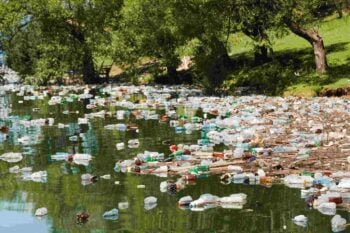
The remaining 30 percent that floats (LDPE, HDPE, Polypropylene and foamed plastics) can be found all over the ocean, but eventually it all accumulates into massive, Texas-sized islands of floating trash called gyres. There are five of these enormous plastic islands floating and spiraling in the world’s oceans today.
A United Nations report claims there is an average of 46,000 pieces of plastic in every square mile of ocean. Today, you can be aboard a ship thousands of miles away from land, but you will see floating plastic debris everywhere.
Even in the most remote reaches of the planet, you will find plastic trash. We’ve turned our oceans into the largest landfill in the world, and we should be ashamed!
The scariest part is that all those floating plastic particles act like “sponges” for waterborne contaminants such as PCBs, pesticides like DDT, herbicides, and other persistent organic pollutants. This makes floating plastics even more dangerous than they are on land.
Filter-feeding marine animals ingest these plastic particles and the toxins they contain, and subsequently pass them up through the food chain, and eventually to humans.
Scientists have not yet determined the full extent of the dangers posed by plastic consumption higher up the food chain, but we do know this: Fish and other sea creatures are being found with plastic in or around their bodies.
In fact, forty-four percent of all seabird species, 22 percent of Cetaceans (whales, dolphins and porpoises), all sea turtles, and a growing list of fish have been found to be contaminated with these materials.
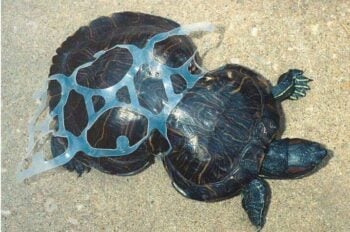
Tiny beads of plastic look like fish eggs or other food sources, so many sea creatures simply mistake them for food. Loggerhead sea turtles often confuse plastic bags with jellyfish, their favorite food. The effects of this are disastrous, including internal blockages, dehydration, starvation, and often, death.
Sea birds are frequently found strangled by the plastic rings that hold six-packs of soda together, or starved by stomachs full of plastic debris. Other creatures meet a painful end by getting tangled up in plastic netting.
Floating plastic debris also blocks the sunlight that sustains plankton and algae, and because plankton and algae are the foundation of the marine ecosystem, this has an enormous effects up the food chain. In some ocean waters, plastic outnumbers plankton by a factor of six to one.
There is no feasible or affordable way to clean the plastic out of the ocean. The ocean is far too violent and vast for that. The only thing we can do is clean up the beaches once all that plastic eventually washes up on them. (And because of natural ocean cycles, it eventually will.)
But if we want to really clean up our mess, the most effective, cheapest strategy is to prevent the plastic from getting there in the first place!
Plastic Pollution in the Air
According to the EPA, toxic pollutants, including styrene, butadiene and methanol are released into the air during the production of plastic—for all of us to inhale. And air pollution is an ongoing by-product of plastic products as they are made, filled, packaged and transported to consumers.
According to the National Resources Defense Council:
In 2006, the equivalent of 2 billion half-liter bottles of water were shipped to U.S. ports, creating thousands of tons of global warming pollution and other air pollution. In New York City alone, the transportation of bottled water from western Europe released an estimated 3,800 tons of global warming pollution into the atmosphere. In California, 18 million gallons of bottled water were shipped in from Fiji in 2006, producing about 2,500 tons of global warming pollution.
And that’s just for bottled water! From creation to disposal, plastic contributes significantly to air pollution, and many of the chemicals that go into their production continue to leach out into the air and into the food and beverages they hold.
Plastic Depletes Natural Resources
99% of all plastics are made from petroleum byproducts. Every year, the oil used to produce just plastic water bottles in the U.S. alone is enough to fuel about 1,000,000 cars! If you add in the oil used for everything else we make out of plastic, you can see the amount of oil wasted on stuff we throw away is simply astounding.
The more we squander what little accessible oil we have left on this planet on really stupid things like single-use plastic bottles, the more we have to procure from other countries and dangerously and expensively drill out of pristine ecosystems.
Given all the war, corruption and environmental devastation caused around the world by the demand for oil, this is neither politically nor environmentally sustainable. Anything we can do to quickly and permanently reduce our use of plastic would help improve our relationship with the people living in oil and gas-rich nations, reduce economic waste at home, and ease the huge burden that extracting fossil fuels places on communities and ecosystems worldwide.
20 Ways to Avoid the Toxins in Plastic
It is very possible to get most of the plastic out of your life, but it will take a little work. Start with the low hanging fruit first. Here are some suggestions for reducing both your use of plastic and your exposure to its toxins:
1. Since plastic is found widely in processed food packaging (this includes canned foods and beverages, which have a plastic lining), the most profound thing you can do to reduce plastic toxins in your life is to change your diet to include primarily fresh, whole, unpackaged foods from the farmer’s market or food co-op. Buying in bulk or joining a buying club can make this very affordable.
2. Get your fresh eggs in cardboard cartons, not polystyrene. Get your fresh meat and cheese wrapped in waxed butcher paper, instead of plastic and foam. Get your fresh milk in bottles, not plastic-coated cartons or jugs. Many stores and farmers encourage you to return the empty bottle in exchange for savings on your next full one.
3. Avoid canned foods and beverages, including canned baby formulas. You can get many canned food items, like crushed tomatoes or broth, in glass jars or tetrapaks instead. A small handful of companies are offering their products in BPA-free cans, and the number continues to grow due to public demand. Here’s a list.
4. When shopping, use reusable produce bags to hold your produce, and reusable grocery bags to carry all your items home. Here’s an easy way to always remember them.
5. Store, reheat or freeze your leftovers in glass containers instead of in plastic “tupperware” or plastic wrap. (These are the containers we use, and while not 100% plastic-free, we love them.) Use reusable cloth baggies instead of plastic baggies for lunches and snacks. (We use these.) Use old-fashioned, waxed butcher paper to store meats and cheeses. (Like this paper.)
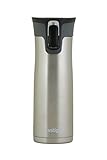
6. Use reusable glass or stainless steel water bottles to carry water with you. Also bring your own stainless steel coffee thermos to the coffee shop or office with you. Most coffee shops have no problem putting your latté in a reusable thermos.
7. Avoid disposable plastic or polystyrene dishes and utensils. Instead, go to the thrift store and get a stack of super cheap mismatched ceramic dishes and stainless steel cutlery that you use only for parties, picnics and the like.
8. Replace your plastic kitchenware with items made from stainless steel, glass, ceramic, or even silicone instead.
9. Bring your own containers to the restaurant for both carryout and leftovers. (I use these, and as long as I hand them over at the same time I order my takeout, no one has turned me down yet.)
10. Ask for your newspaper and dry cleaning without plastic wrap.
11. Don’t take the receipt at the register, or only handle it using gloves. Those slick, thermal-paper cash register receipts are a major source of BPA contamination via your skin.
12. Get a good water filter for your tap to replace bottled water. Or, if nothing else, buy bottled water only in reusable 5-gallon polycarbonate containers, and keep them in a cool, dark place. (We use this filter because it also removes fluoride.)
13. Make your own shampoo, lotions, liquid soaps, and cosmetics and store them in glass, ceramic or stainless steel containers. There are tons of DIY recipes on the internet you can make to replace all the plastic bottles of personal care potions you currently use.
14. Replace your toothbrush with a non-toxic one. There are many choices here. Avoid plastic toothpaste tubes (and nasty chemicals too) by making your own toothpaste.
15. Always ask for BPA-free dental sealants and BPA-free composite fillings at the dentist office. If your dentist doesn’t offer it, find one that does.
16. Use cloth diapers.
17. Because children are extra susceptible to the toxins in plastics, it is especially important to make sure your baby bottles, pacifiers, teething toys (or anything that ends up in your child’s mouth) are safe. Choose glass bottles with real rubber nipples, wood or cloth teethers, etc. (Find toxin-free baby products here)
18. Choose wood, cloth, steel and paper-based toys for your children over plastic, whenever possible. This is especially important while your kids are still young enough to put things in their mouths. See if you can get plastic toys like Legos second hand from eBay, Craigslist or other online outlets.
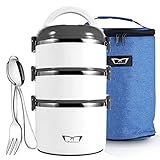
19. Replace your school-age child’s plastic lunchbox with a cloth or stainless steel one. There are many non-toxic lunchbox choices here, and most are great for adults, too!
20. Make your own cleaners from non-toxic ingredients, and store them in glass jars and bottles. You can even take the spray pump off of an old spray bottle, and screw it onto a recycled glass vinegar bottle.
What other ways have you reduced the plastic in your life? Please comment below!
Shared with Simply Natural Saturdays, Sunday School, Better Mom Mondays, Clever Chicks Hop, Thank Goodness Its Monday, Natural Living Linkup, Mix it Up Mondays, Homestead Barn Hop, Fat Tuesdays, Family Table Tuesday, Traditional Tuesdays, Healthy Tuesdays, Titus 2sday, Backyard Farming Connection, Teach Me Tuesdays, Anti-Procrastination Tuesdays, Gathering Spot, EcoKids Tuesday, Tutorial Tuesday, Tuned-In Tuesday, Real Food Wednesday, Frugal Days Sustainable Ways, Healthy 2day Wednesday, Wildcrafting Wednesdays, Wicked Awesome Wednesday, Party Wave Wednesdays, Homemaking Linkup, Seasonal Celebration, Fresh Food Wednesday, Whole Food Wednesdays, Pennywise Platter, Creative Juice, The Mommy Club, Your Green Resource, Simple Lives Thursday, Tasty Traditions, Thank Your Body Thursday, HomeAcre Hop, Natural Living LInkup, Old Fashioned Friday, Fight Back Fridays, Fresh Bites Friday, Healthy Vegan Fridays, Link Love, LHITS DIY Linky


{ 39 comments… read them below or add one }
Great List! My dentist still doesn’t understand why none of my kids have gotten the “6 year” sealants. Not a single cavity among them. I think a good diet has more to do with that than even brushing. I still cringe when I think of my mercury fillings, but unfortunately they stay until they fall out. If we ever need another filling I’ll make sure to choose differently. Going now to check out the dentist link for one near me!
Hello darling!
I’m including this post in my monthly feature wrap up for the Wednesday Fresh Foods Link Up – hope to see you there!
xo, kristy
Awesome, thanks!!
Great info as well as helpful tips for avoiding plastic, as much as possible. Thanks for sharing your post with us! I hope you join us again (yeah I know it’s a day late… linky issues) at Eco-Kids Tuesday!!
Great info, things really need to change. Thanks for sharing your post on The HomeAcre Hop! Hope to see you again this week!
http://www.theselfsufficienthomeacre.com/2013/04/the-homeacre-hop-16.html
Excellent information. I really need to crack down on all this. Thank you so much!
Wow, this simply a great post with tons of information and helpful resources! I am going to come back to it again and again to help me on my way to limiting even more plastic in my life. You said it is better to use even silicon… I have wondered about the bakeware that is made out of silicon, do you know anything about toxins leaching into food from using silicon?
Thanks for sharing on Natural Living Monday!
Get information Dawn. Thanks so much for putting this all together. I think of plastic as something that will last forever and that is a frightening thought. I am passing this knowledge on to my grand kids before we poison their bodies too. Thanks for sharing at The Gathering Spot
I’m so glad I stumbled upon this article! Reducing plastic in my life was my next step towards living cleaner and greener! I’m moving out on my own and am really excited to have 100% control over what I buy and use!
I was aware of BPA in plastics, but had no idea how many products contained it! Thank you for a very informative post, and for offering solutions to the problem. I found you through the Simple Lives Thursday blog hop.
You said …. PVC is one of the worst health and environmental offenders. Avoid at all costs.
Kinda hard to do since almost every water pipe in this country is made out of PVC.
Yes, that is a problem. (Though, to be accurate, most water pipes in this country are old and still made of metals like steel, copper, etc., not PVC.) This is why a good water filter is your friend, not only to remove chlorine, fluoride and other toxic things in the water, but to remove contaminants from the pipes themselves too. If you are building your home, or choosing new pipes, you have the option to avoid PVC.
Great article! I was just starting to despair until I read your hints and tips for actually trying to avoid plastic which is great. A lot of which I had never considered. I have so much plastic in my life that it’s overwhelming but I’ll keep this in the back of my mind and eventually at some point in my life I’m sure I’ll make a big reduction in the amount of plastic I use. Thank you so much!
I’ve basically already managed to do all of those 20 steps to reduce the plastic/toxins in my life. BUT there are a few things I can’t get away from. Minor things include the metal tops of canning jars (didn’t realize those had toxins!) and the plastic snap tops for my glass tupperware. Those don’t really concern me, though. The only plastic I can’t seem to get away from is the plastic that I get my meat in! I buy all my meat directly from the farmer, but it’s always prepacked in some kind of plastic. Short of raising and butchering my own animals, there doesn’t seem to be a way around this. Even if I could do that (definite impossibility), a whole animal wouldn’t fit in my freezer, and glass jars certainly don’t allow for airtight storage, resulting in slightly stale and less nutritional meat when I was ready to eat it. I guess it’s all about reducing, not eliminating, right?
That one is a tough one! I get my meat from the farmer in butcher paper, but even the paper is often coated inside with plastic. Plastic is deeply embedded in modern life, so kudos to you for doing so much to eliminate it already. If you can find old-fashioned wax paper, or soy-waxed butcher paper, that will be your safest bet.
So practical! Thank you!
We will share it with our readers via Facebook!
Thank you for sharing!
Dawn,
This is a really extensive article. I like all the practical ideas for reducing the presence of plastics in our lives.
There are a few details that I would like to study further. Could you give a list of your source material for this article? I would appreciate it so much.
Thanks!
Nearly every link in the article is a source for where my information came from. I always place my sources either within the text or at the end of the article.
Wow, the receipt thing shocked me the most! How sad that our world has gone so far with the chemicals in everything! Thanks so much for sharing this info at A Humble Bumble!
Great article. I’ve got a question about canning lids. What about the Tattler canning lids?
You should contact the manufacturer to find out what type of plastic they are using and whether you want to risk it. They say BPA free, but are they using BPS?
Love this article. Thank you yet again for another very helpful informative article:) I try to recycle but after reading this I think I can do more. Thanks!
Totally sharing this.
I just wanted to point out that that when I followed the link to always remember your produce bags, and then from there followed the links to the ones you use, those links did not work.
There is one interesting phenomenon that I have noticed: When I am at my local health food store buying organic produce, if I put them in a paper or cloth bag, they tend to dry out or go bad before I use them all up. They have taken great pride in sourcing the best choice they can for plastic produce bags – which are green, and while they do acknowledge that they are plastic, they are the least toxic version they could find. My produce stored in the plastic bags they provide actually stay relatively fresh until I can use them up. So – for that aspect alone – I am more likely to use the plastic bags – even though I abhor plastic.
My question is: Do you know of any reusable produce bags that can keep produce fresh for as long as the plastic bags do?
Thanks, I’ve fixed the links now!
Different kinds of produce store better in different ways. Leafy greens and celery keep freshest when I put their stems in a glass of water in the fridge, or if I wash them and lay them on clean towels in the crisper. Berries do great in open glass containers. Root crops I usually store loose in the other crisper drawer, with the exception of sweet potatoes, which shouldn’t be refrigerated. Tomatoes lose all their flavor in the fridge so I leave those out and eat them fast. Using these methods, my produce usually keeps fresher than it would even in plastic!
Thanks! These are the type of things that I’m sure were common knowledge once upon a time, but I’d never heard of before
Regarding #3 above, Tetrapacks also have plastic lining, plus an aluminum lining. They may be BPA free, but they still contain plastics that leach. This is especially an issue if you have been, like me, avoiding canned tomatoes due to leaching of BPA, and have switched to Tetrapacks, only to find a different plastic lining.
Great point! And tetrapaks can’t be recycled either!
Nice article. I am a little conflicted with what I read because I think there is more to the story. Here is my initial reaction and questions:
Recycle code 6 is not just Styrofoam. Actually, Styrofoam is a trademarked brand. The technical term is expanded polystyrene, but code 6 can also be thermoformed or injection molded.
Recycle code 7 is what PLA (polylactic acid or compostable corn products) which are great – if they complete the life cycle.
Plastic is a petroleum byproduct. Therefore, companies like Amoco and Mobil back in the day figured out how to use this waste and turn it into plastics. I have not doubt that demand for plastics increases the petroleum need in this country, but this material can’t fuel our car (at least at this point).
All plastics are able to be recycled. Some communities do not support anything beyond code 1 & 5, but even expanded polystyrene is recyclable and should be – speaking to the litter element of your post.
I am a huge fan of reduce, reuse, recycle. I also happen to be in the plastics industry. I approached my company and asked if we use BPA in our products and received detailed information confirming we do not. I need to look into the toxins as I maybe never have wanted to do so before.
Paper is one of the biggest wastes in our society. Although if not polycoated, paper is compostable, paper still makes up to 40% of landfill mass.
From an environmental standpoint, here is some food for thought. What is more “green?” I agree that using a renewable resource is better than petroleum, but only if the life cycle is completed. “foam” is 90% air and uses substantially less energy in the manufacture and transport. So, all things being equal, the paper/bagasse (bamboo) product compared to foam is greatly worse for the environment when considering the energy/carbon footprint. Please recycle people – it’s irresponsible to not do so.
I am two states away from a commercial compost facility. Will these products break down in my back yard compost? Possibly, not nowhere near the 180 requirement to be considered compostable as that is only achieved in a commercial composting facility which maintains a specific heat and humidity level and introduces enzymes to break down the product.
I’m not saying foam is good, but from the littering aspect, our society can do more and legislation should be geared to ramping up recycling and not banning products. We try to live the 80/20 rule, so is a good first step just reducing plastic use and being conscious about the type of plastic used?
I have some questions for you:
What if PVC does not come in contact with the food? How long would it need to be in contact to release toxins?
Is leaching happening with plastics like Tupperware sitting in the kitchen releasing toxins airborne?
Are plastics that are heated (ex recycle code 5, polypropylene is microwaveable) more likely to leach toxins?
A water bottle sits in a warehouse and on store shelves – what about food service items? Is a PET cup okay to use if used for less than 20 minutes?
Can you help me understand the leaching a bit more? My ignorance makes me think the plastic at a molecular level would not detach from itself, meaning my soda is not going to have plastic in it. I could see horrible things happening when the structure of the plastic is changed. Example:
Heat tolerances:
PLA 105 degrees
PET 120 degrees
EPS 150 degrees
PP 250 degrees
I could see horrible things happening when the structure of plastic changes:
PET water bottle on a truck in Arizona where temp goes above 120
PLA cup when they poured espresso in my wife’s mocha and cup warped
So, thank you very much for an informative article. I have a lot to learn and am slightly biased because of my income. However, I am in search of the truth and often find the full story in one place. Maybe I have some research to do.
I hope maybe I asked some questions that other haven’t and you have all of the answers! Thank you
Good morning! What economical suggestions do you have for lunch food storage? I pack three lunches per day for my family (soon to be four) and although we use reusable containers, I know they are not the best choice health-wise. Metal storage containers are expensive, however. Also, do you have any suggestions for ziploc alternatives? We use them sparingly but I’ve been trying to cut them out completely. Thank you for your help and information!
We put sandwiches and snacks into these reusable cloth baggies. They are washable and convenient, and even pretty easy to make yourself, if you are handy with a sewing machine.
What an amazingly helpful resource on navigating the confusing world of plastics! Thanks so much for including our research too
I couldn’t have written it the same without the work that you all do! Thank you Soft Landing!
Do you have any advice on what to freeze items in? I like to make beans in bulk and freeze some but am hesitant on putting glass in the freezer. Any suggestions?
Thanks for commenting! I use my glasslock containers in the freezer all the time, but I do leave headroom for expansion. For my biweekly broth (half of which I freeze), I’ve been using these BPA-free containers, but I’m still looking for a better solution.
for broths, and odds & ends that i’m going to throw in soups, i put in glass spaghetti jars. I still use plastic but am trying to incorporate glass as much as i can. I am saving as much wide mouth glass containers as i get them! (salsa jars, jelly jars, pickle jars, large glass jars from Sam’s club that had artichoke hearts in!)
For my travel coffee, or water, i put in glass jars that were from snapple tea, or other fruit juice which i happened to buy (which i never do and i’m running out of those bottles!!)
Recycled food jars are about as eco-friendly and economical as you can get! Kudos to you!
Excellent article — I have shared it on my Facebook and Google Plus accounts. Well researched, engagingly written, encouraging, non-scolding tone.
I am selective about what I like to pass on to my readers and followers, but I find your work well worth sharing. I do not know if this is on the weekly social media love link on VGN, but I’m passing it on — I find I have little time to cross check an article to see if it’s on the love link, but if I find it and like it, I pass it on.
Indeed, this post is on the VGN link love list. Thanks so much for sharing!